From Intertitles to Spoken Dialogue: How Movies Put Words on Screen
See how intertitles and spoken dialogue shape a scene’s pace, mood, and character, with a simple viewing plan for noticing what each form conveys.
The most common mistake when watching an early silent film is to treat its intertitles as clumsy dialogue waiting for sound. That shortcut misses what the cards do: they pause the image, select a few words, and let viewers supply the voices and timing. From intertitles to spoken dialogue, the change is not simply from reading to listening. It is a change in where words sit, how long they stay available, and how closely they bind speech to a visible speaker.
Choose a silent film with intertitles and a sound-era film with clear dialogue. Watch them in five separate sessions, whenever your schedule allows; they do not need to fall on consecutive days. In each session, focus on how words enter the scene and what the film lets you notice around them.
What should you notice in an intertitle?
An intertitle is a written card inserted into the film. It may give dialogue, identify a place or time, explain an event, or offer a narrator’s comment. The card takes over the screen, so the image temporarily stops showing ongoing action. That pause gives you time to read, but the film still controls when the words arrive and when the next image appears.
Begin by noticing what kind of information each card provides. A line of dialogue may establish a character’s intention. A brief explanatory card may bridge an action the film does not show. Some cards also shape mood through their wording, arrangement, or visual design. Ask what changes in the scene when the card appears: does it identify a new place, supply a missing event, or give a character’s words?
Then notice the gap between reading and imagining. A card might tell you that a character is angry, but it cannot carry a particular vocal texture. You may imagine a sharp, quiet reply or a loud outburst. The actor’s face and gestures offer clues, while the card leaves the voice for you to supply.
How does spoken dialogue change delivery?
With spoken dialogue, words arrive as part of the filmed scene rather than replacing it with a card. Viewers can hear a character’s voice while watching a face, gesture, or reaction. A hesitation, a clipped answer, or a shift in volume may alter how a line feels without changing its wording.
Spoken dialogue also has a fixed pace. A viewer cannot keep a line on screen while considering it, as they might with an intertitle. The dialogue passes in time, guided by performance and editing. Listen for timing as well as content: does a reply come quickly, after a pause, or over another sound?
Sound does not remove the viewer’s work. A speaker’s voice gives you information about delivery, while the image continues to show expressions and movement. The two may reinforce each other or pull in different directions. A calm sentence paired with a guarded expression, for instance, can make the character’s meaning feel uncertain.
What should you track in five sessions?
Keep the routine small. You do not need to take extensive notes or watch a whole film in one sitting. These five sessions can be spread across several days or weeks. Use the same short scenes when revisiting a passage so you can focus on one detail at a time.
- Session one: Watch a short silent-film passage without pausing. If you notice an intertitle, note what happens in the image just before it; if you do not, choose a passage with a card for the next session.
- Session two: Revisit that silent passage. If a card gives dialogue, identify the character who may be speaking; if no speaker is suggested, consider whether it explains an event, marks a transition, or comments on the action.
- Session three: Watch a sound-film conversation. If one speaker’s delivery stands out, note a pause, emphasis, or change in vocal energy; if the delivery feels even, focus on how the other character responds.
- Session four: Focus on what happens between spoken lines. If a face or gesture adds information, describe the visible reaction; if it does not, note whether the words alone carry the exchange.
- Session five: Compare one intertitle exchange with one spoken exchange. If the card leaves a voice or speaker uncertain, name that open point; if the spoken scene supplies a vocal cue, describe how it changes the line’s tone.
If you miss a line or lose track of a card, pause after the scene rather than interrupting every few seconds. Replaying a short passage can help. Transcribing every word is not worth the effort unless you have a specific reason to study the wording; a few notes about timing and delivery are usually more useful.
How can you compare the forms through their details?
Look at the concrete work each form does in the scene: where the words appear, what the actor is doing at that moment, and whether the next image changes their meaning. An intertitle gives reading a distinct pause. Spoken dialogue lets words and performance unfold together. Neither automatically provides a richer scene; the useful question is what happens to a particular line in its setting.
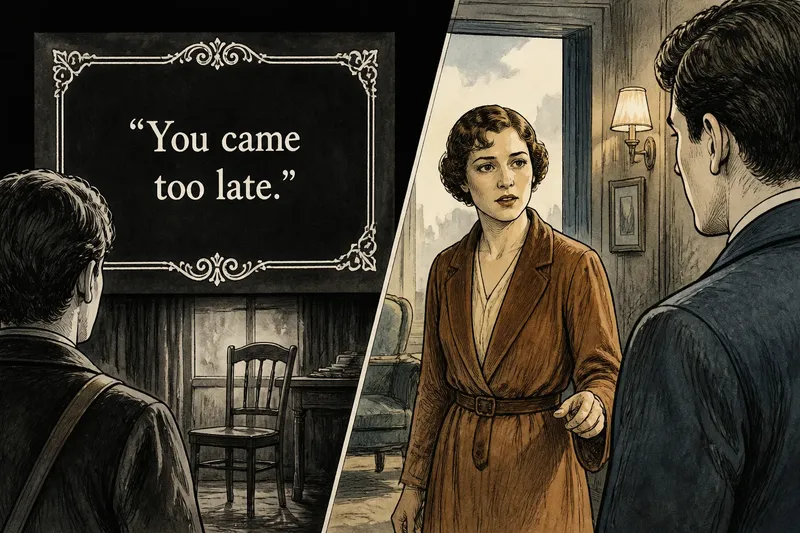
Imagine a silent scene in which a traveler enters a room, sees an empty chair, and then reads an intertitle: “You came too late.” The card supplies the words, but the traveler’s stillness and the chair do not identify who is speaking or what happened. Now imagine a sound-era version in which another character says the same words from across the room. The voice may sound resigned or accusatory, while the traveler’s reaction unfolds as the line is delivered. The wording stays the same, but the scene gives the line a source and a vocal tone.
For a compact note, write down the line or card, what the actor does, and what changes in the scene immediately afterward. Those details make a comparison specific without turning it into a ranking of film forms.
What questions help when a detail is easy to miss?
Does every intertitle represent spoken dialogue?
No. Some cards supply exposition, mark a change in time or place, or provide commentary rather than a character’s line. Check the surrounding action for a speaker; if none is suggested, read the card as information or narration.
Can a viewer infer a voice from a silent performance?
A face or gesture may suggest a mood, but it does not settle exactly how a line would sound. Treat the voice you imagine as a possible reading, not as something the film has literally provided.
Why can spoken words be harder to follow than a written card?
Speech passes at the film’s chosen pace, while a written card remains available as you read. If a line slips by, watch the next response or replay the passage rather than assuming the missed words explain the whole scene.
Do captions work like intertitles?
Captions make spoken words readable while the scene continues, so they do not usually replace the image as an intertitle does. They can help viewers follow dialogue, but they cannot reproduce a voice’s sound or every feature of its delivery.
What details make the transition easier to hear?
Notice whether words arrive as a pause for reading or as an event unfolding inside the scene. Then attend to the actor’s face, the timing of a response, and what the next shot reveals. When you compare intertitles to spoken dialogue, those specific details show how placement and delivery shape a line—and help you decide what the scene leaves for you to work out.